
The Overlay Comparison Experience
Redesigning version comparison for SAP Signavio's process analysts
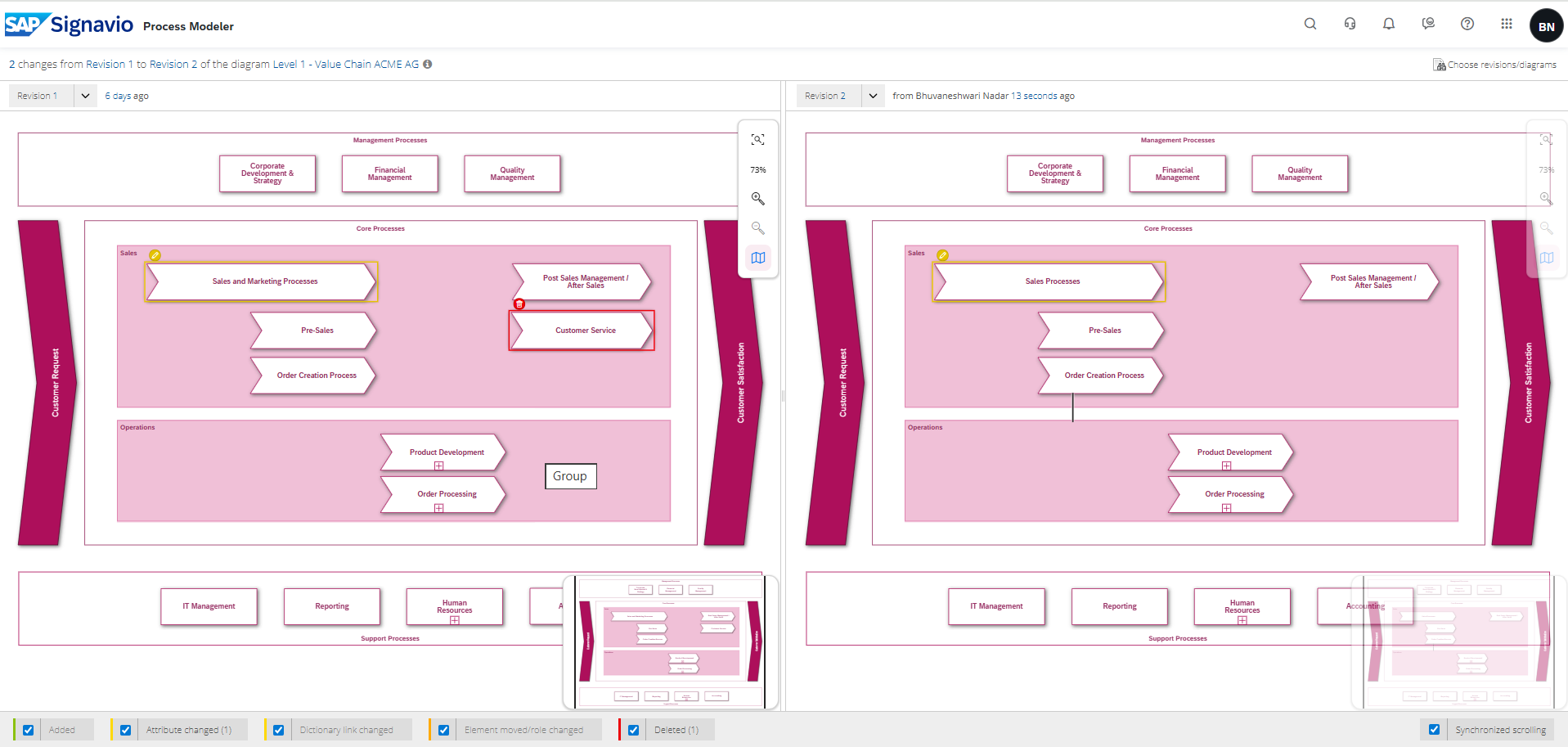
SAP Signavio’s process analysts review hundreds of diagram revisions every week - yet their comparison workflow relied on a fragmented side‑by‑side view that forced users to mentally map changes. This created high cognitive load, frequent errors, and slow governance decisions.
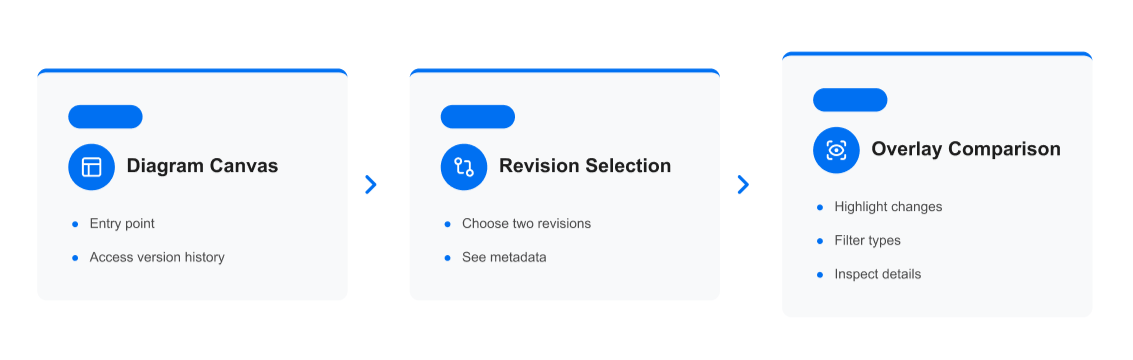
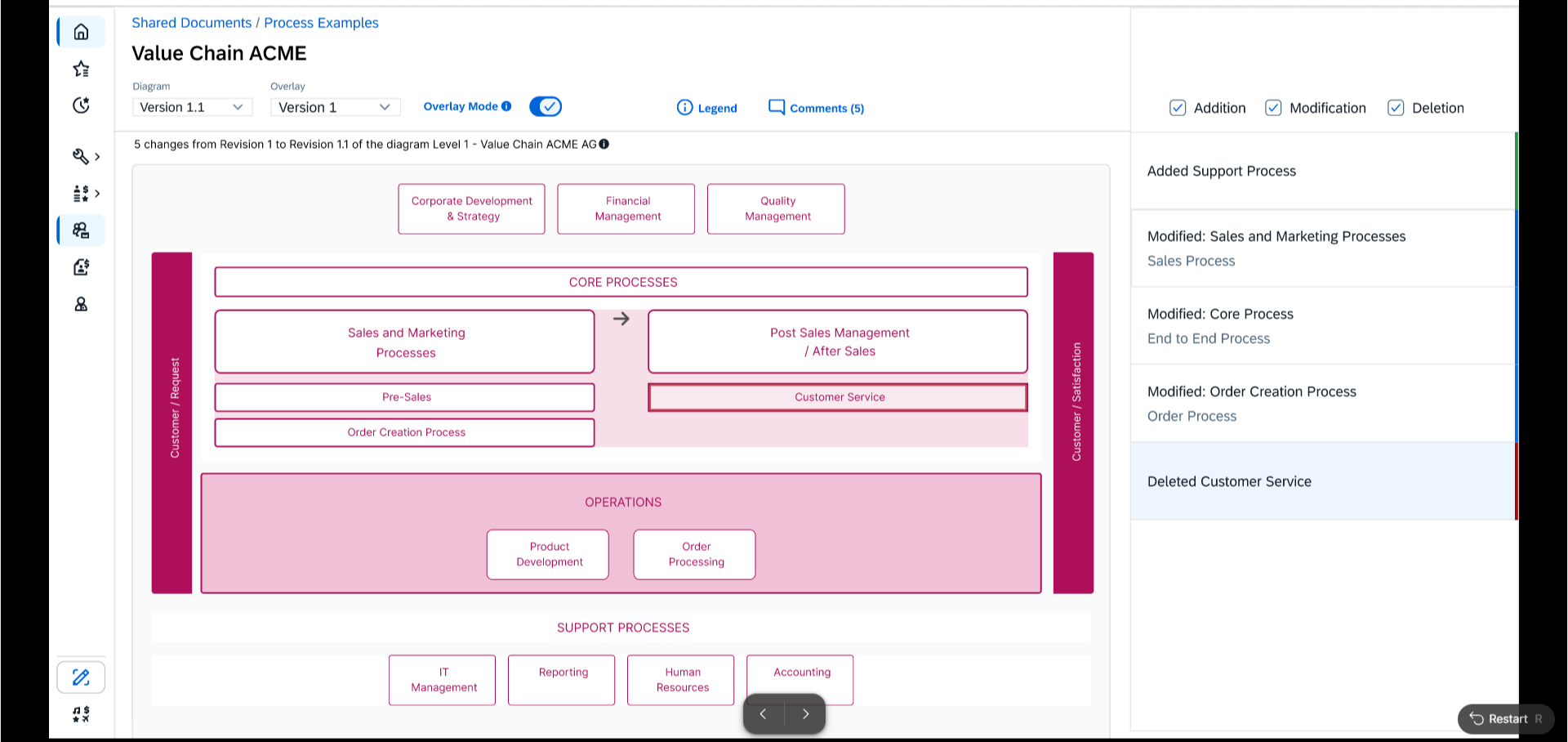
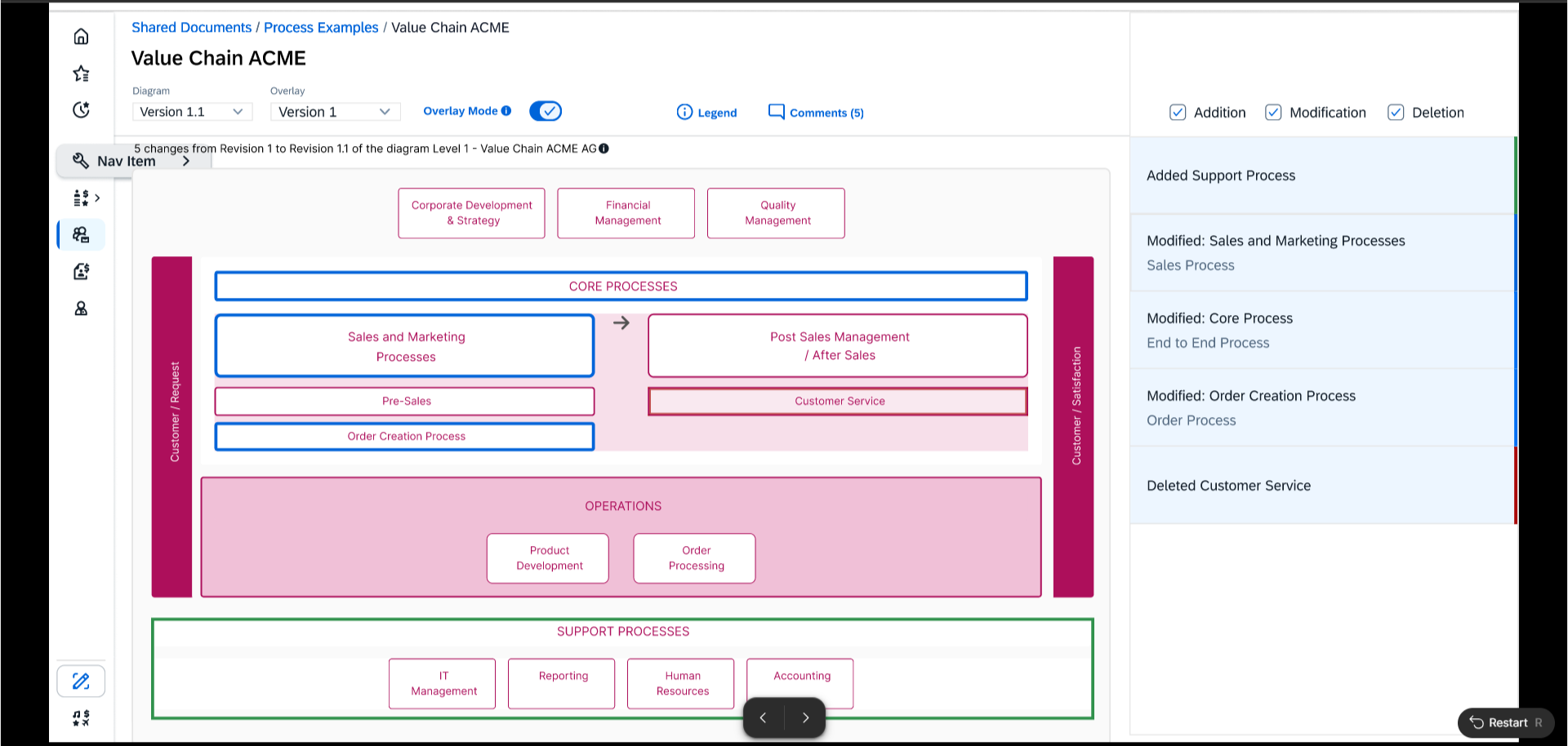
I redesigned the comparison experience into a unified Overlay Comparison Mode that preserves spatial context, reduces mental effort, and enables analysts to evaluate changes directly within the diagram.
Role
Lead Product Designer
Timeline
6 weeks
Outcome
A scalable, Fiori‑aligned comparison system that reduced task time by 35%, increased task success to 92%, and became the foundation for future AI‑assisted comparison.
Team
PM, Engineering
The Challenge
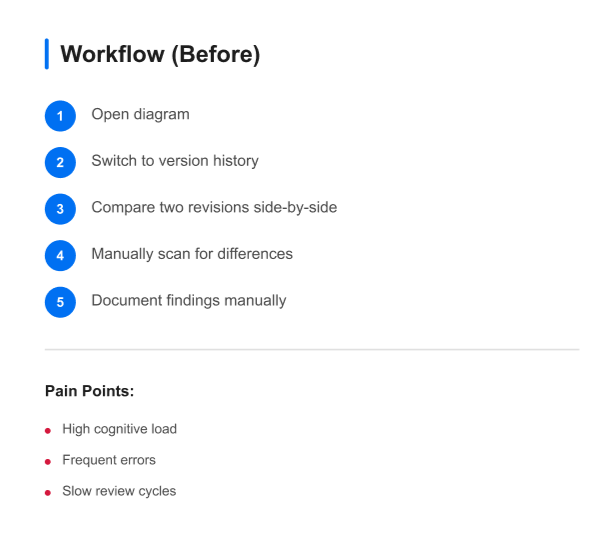
Process analysts struggled with:
High cognitive load from mentally aligning two diagrams
Loss of spatial orientation when switching between revisions
4.5+ minute comparison cycles
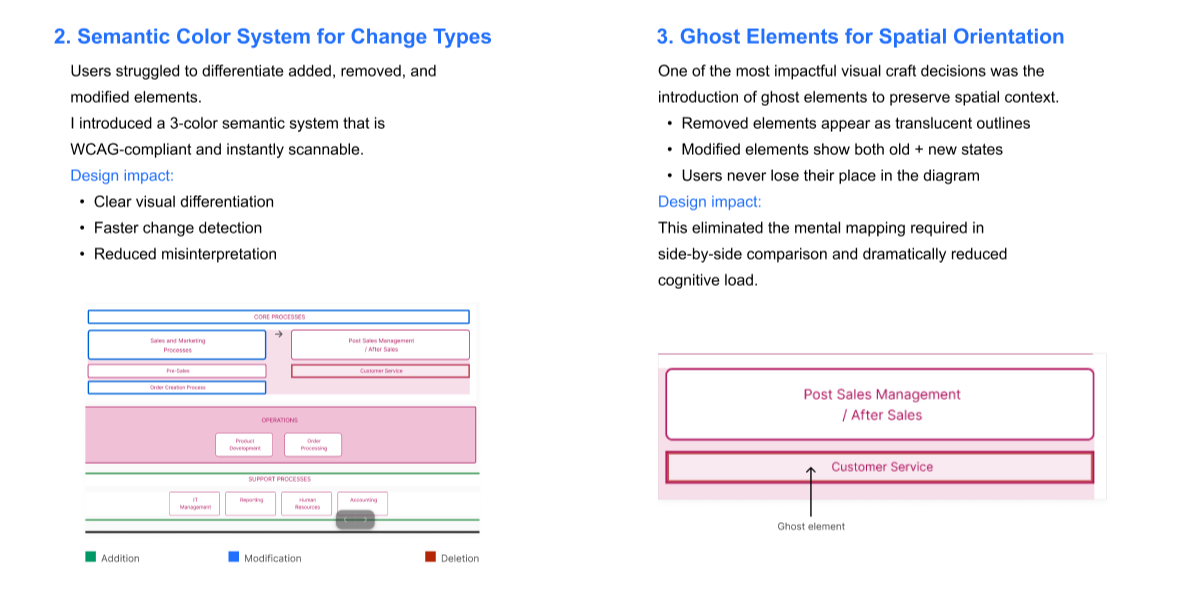
Frequent misinterpretation of added, removed, or modified elements
No unified workflow for reviewing changes
The existing experience slowed governance reviews and created inconsistent decisions across teams.
User Context
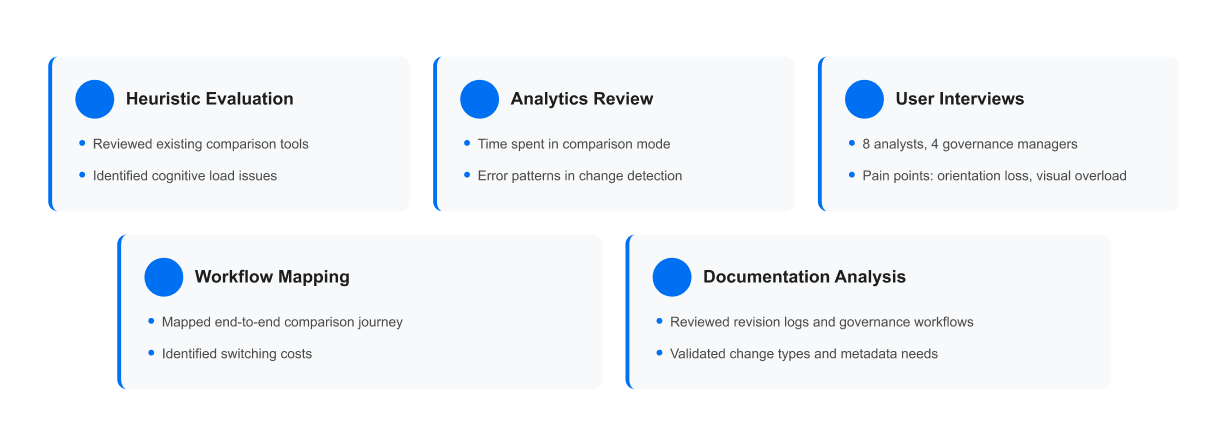
Research & Discovery
Information Architecture
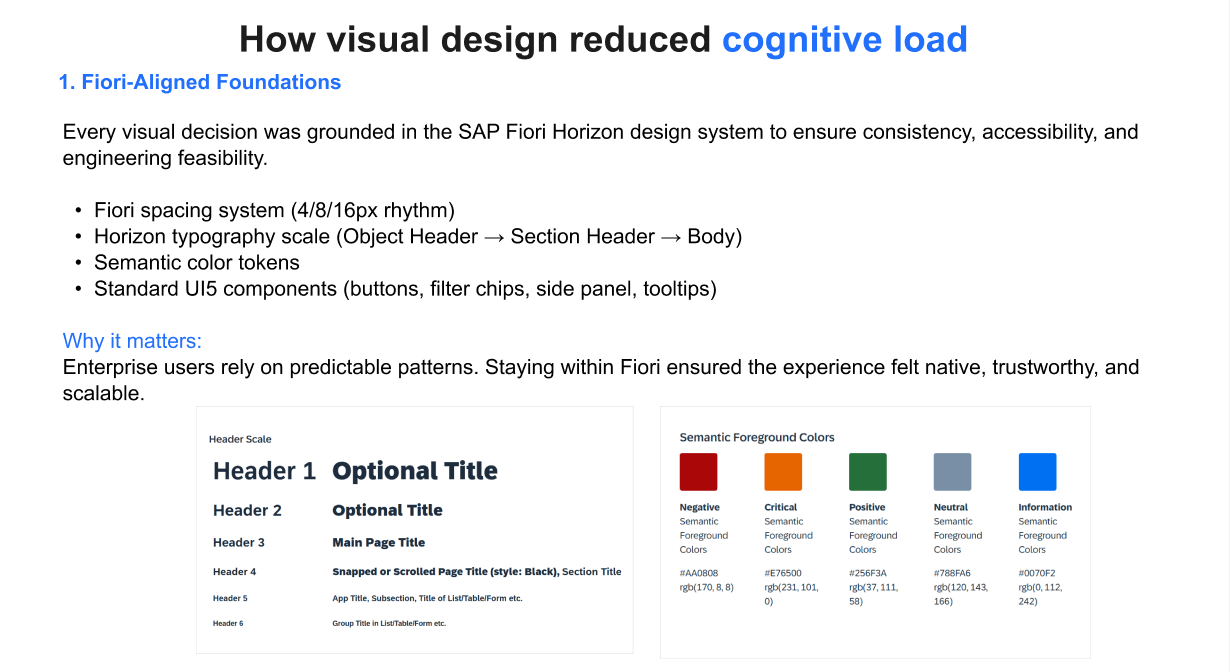
Final Design
92%
Task SuccessFew errors
Change detection35% faster
Comparison timeImpact
Reflection
This project reminded me that enterprise users don’t want more features — they want clarity. When workflows are complex, even small design decisions can make a big difference in reducing mental effort. I learned how important it is to preserve context, show only what’s needed, and let users dive deeper when they choose.
I also saw how much trust grows when changes are transparent and easy to understand. Working closely with analysts, engineers, and the design system team helped me shape a solution that feels simple, even though the problem was complex.
Most importantly, this project reinforced that good design in enterprise tools is about removing friction, not adding more layers. Clear, calm interfaces help people work faster and make better decisions.