
Import History & Insights Panel
Bringing Transparency, Trust, and Control to SAP Signavio’s Import Workflow
SAP Signavio is a core platform for enterprise process analysts and administrators who frequently import BPMN models, metadata, and process data from multiple systems. Despite the importance of this workflow, the import experience had a critical gap: no visibility into what was imported, by whom, and with what impact.
This lack of transparency created operational risk, slowed down audits, and eroded user confidence.
My goal was to design a solution that made the entire import lifecycle traceable, explainable, and trustworthy.
Role
Lead Product Designer
Timeline
4 week Lean UX sprint
Team
PM, Engineering, Internal Process Analyst, QA Lead
The Hook & Challenge
A High‑Risk Workflow With Zero Visibility
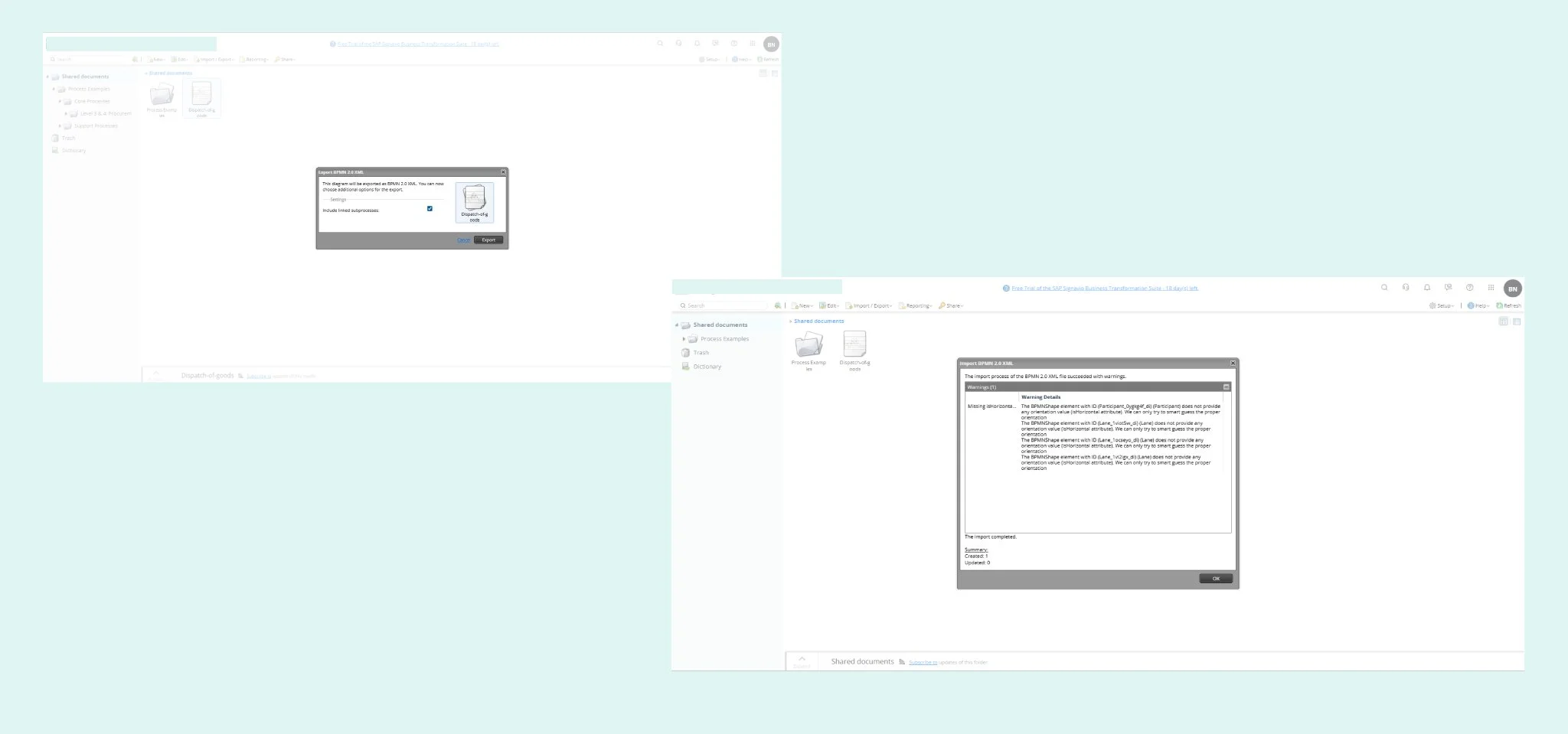
The import workflow was widely used but poorly understood. Once a file was imported, there was no trace of:
Who performed the import
What file was uploaded
What changed in the system
Whether the import succeeded, partially succeeded, or failed
For teams operating in regulated environments, this created risk, inefficiency, and hesitation. Analysts feared overwriting critical work. Compliance teams struggled to audit changes. Troubleshooting required engineering support.
The challenge was clear:
Design a centralized, insight‑rich import history that restores trust and control -without disrupting existing workflows.
Goal & Context
What We Needed to Achieve
Transparency — Provide a single source of truth for all import activity.
Efficiency — Reduce time spent on troubleshooting and internal audits.
Governance — Strengthen compliance and operational confidence.
Success metrics included:
Reduced engineering dependency for log retrieval
Faster root‑cause analysis for failed imports
Increased analyst confidence in performing imports
A scalable foundation for future capabilities (e.g., rollback)
Constraints included limited direct access to end‑users, tight timelines, and the need to align with existing Signavio design patterns.
User Research & Insights
Understanding Analysts, Administrators, and Their Pain Points
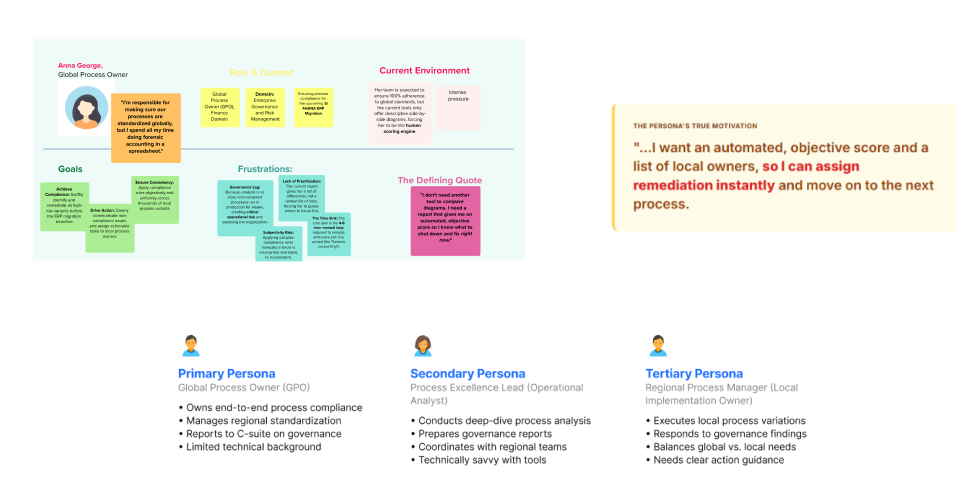
I conducted structured interviews with internal process analysts who regularly handled imports. These conversations revealed three critical insights:
Traceability is non‑negotiable Analysts needed to know who did what to maintain accountability and avoid accidental overwrites.
Errors must be explainable When imports failed, users needed actionable context—not cryptic error messages.
Confidence drives adoption Users avoided imports because the workflow felt irreversible and risky.
These insights shaped the core design principle:
Every import action should be visible, explainable, and auditable.
The Process & Iterations
A Four‑Iteration Journey Toward Clarity and Control
These principles helped align the cross‑functional team and prevented scope creep.
Final Solution & Visuals
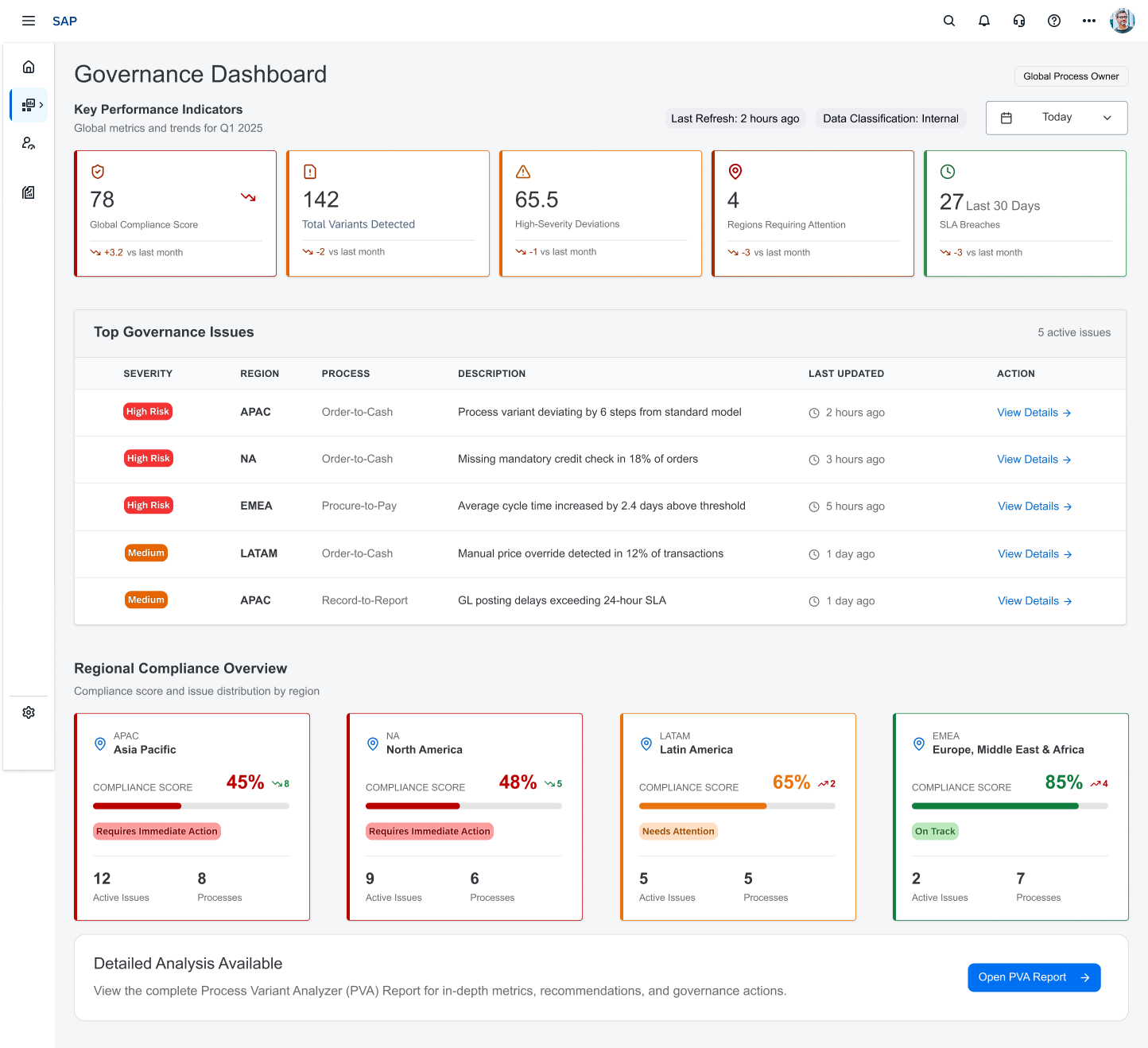
I designed a dashboard that gives GPOs a global view of compliance health.
It highlights: Compliance score, High‑severity deviations, Regions requiring attention, SLA breaches, Top governance issues
This dashboard acts as the entry point for triaging variants.
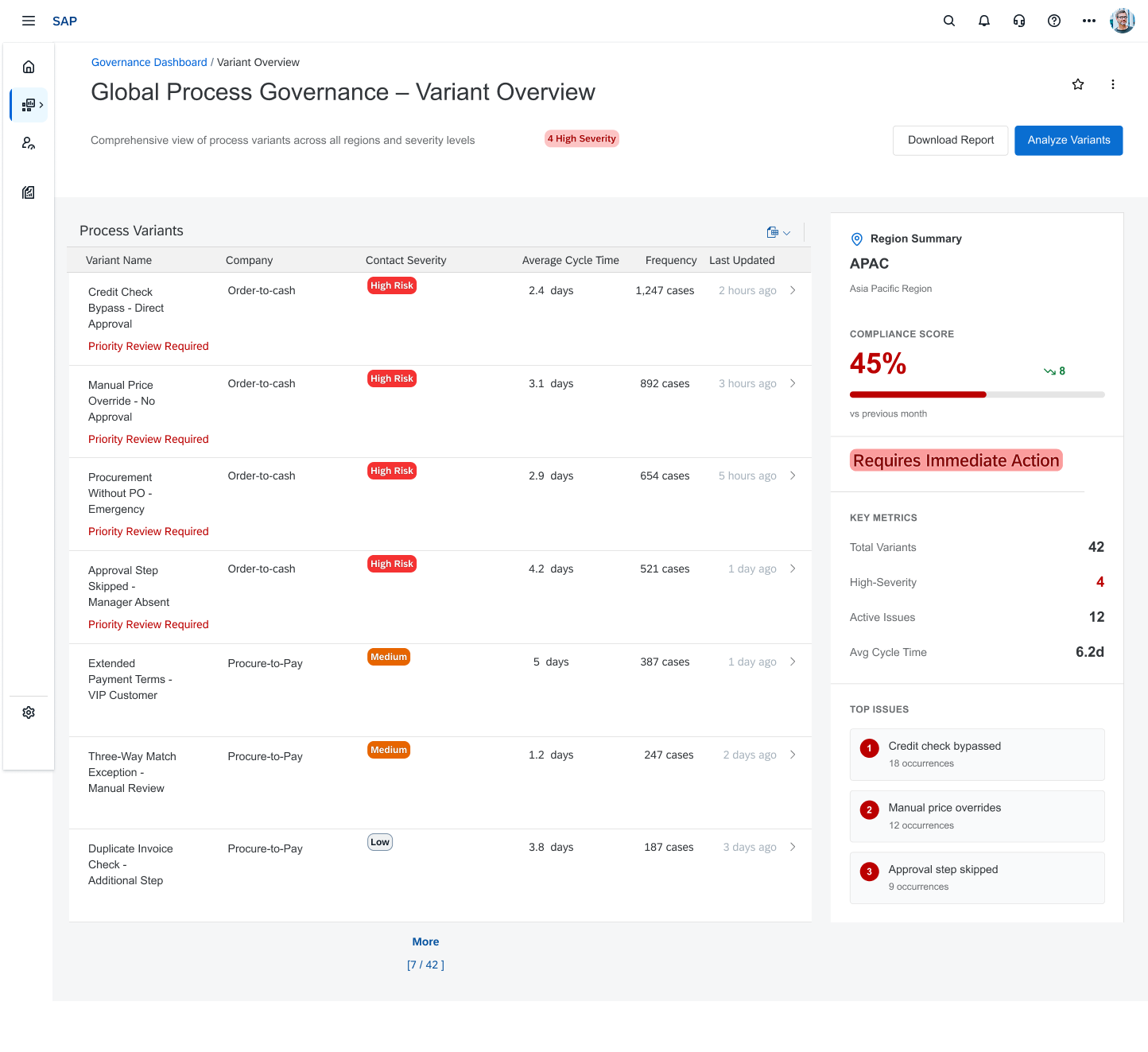
The variant queue ranks variants by risk, severity, and frequency. This ensures that GPOs always start with the highest‑impact issues. The queue also provides quick context so users can decide whether to dive deeper.
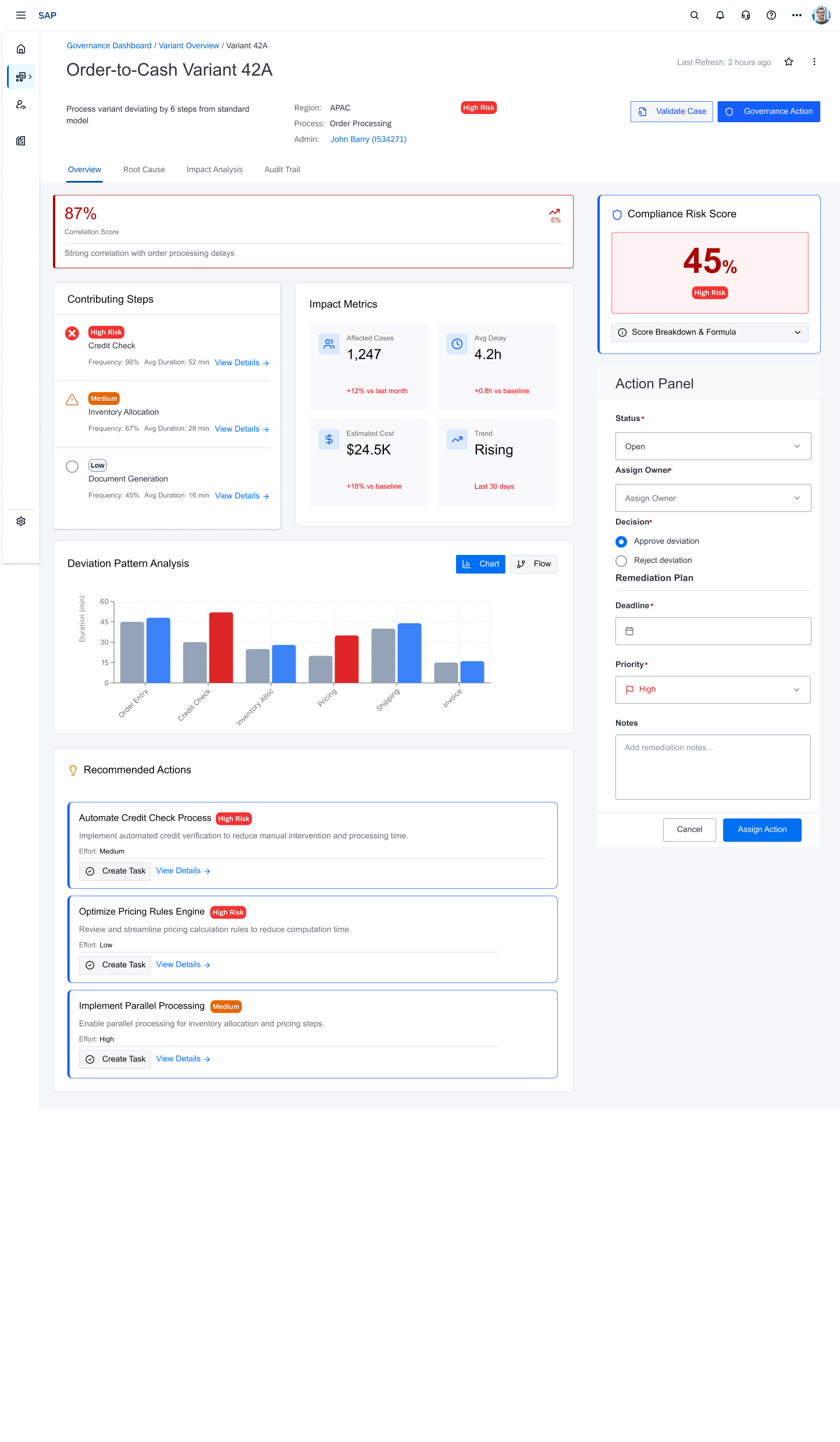
This is the core of the experience and the screen I spent the most time refining.
Left side: Compliance score, Scoring breakdown, Root‑cause analysis, Evidence and metrics, Process metadata
Right side: Approve, reject, assign actions; Due dates; Notes; Automatic audit trail
This layout keeps the decision and the context in one place, reducing cognitive load and eliminating the need to switch tools.
Improved efficiency
Stakeholders projected a significant reduction in time spent on troubleshooting and audits.Reduced engineering dependency
Teams no longer needed backend support to retrieve logs.
Empowered users
Analysts gained confidence through clear visibility into every import.Results & Impact
Future‑ready foundation
The modular design supports upcoming features like rollback and version comparison.Reflection & Learnings
This project reinforced the importance of visibility in high‑stakes workflows. Even simple transparency features can dramatically shift user confidence and operational efficiency. Working with limited direct user access pushed me to rely on proxy insights, rapid iteration, and cross‑functional alignment. It also strengthened my ability to design for complex enterprise environments, where governance and traceability matter as much as usability.
The Import History & Insights Panel stands as an example of how thoughtful UX can turn a risky, opaque process into a trusted, auditable, and user‑centered experience.